
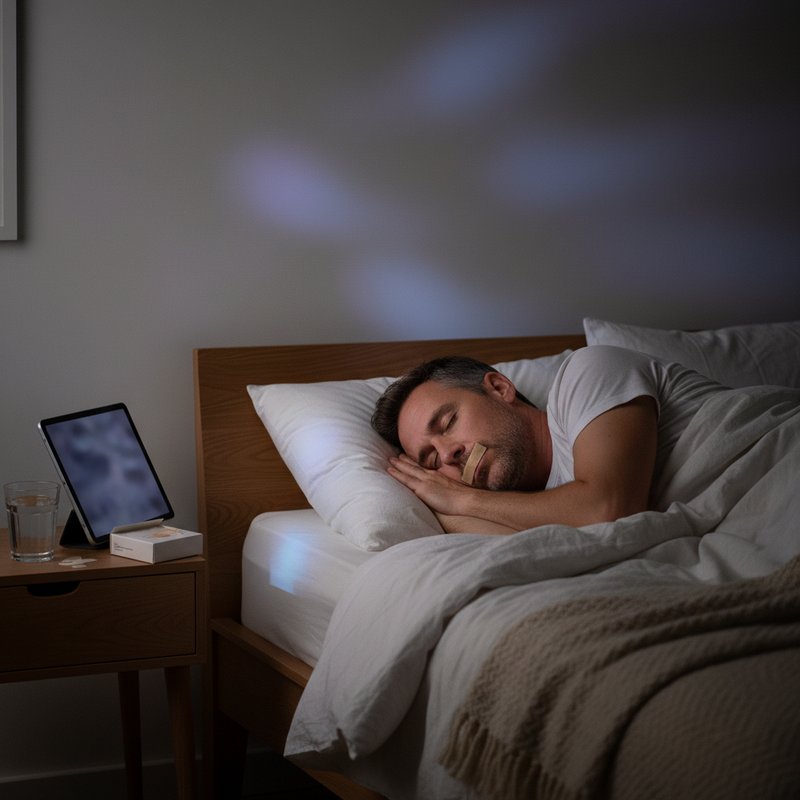
Understanding the Science of Nasal Breathing and Sleep Quality
Waking up with a dry throat and complaints about snoring is a common experience for people who breathe through their mouth during sleep. Many readers have heard about the growing discussion around mouth taping for snoring and wonder whether it is a real solution or simply another internet trend. The basic idea is straightforward: when the lips remain closed during sleep, the body is encouraged to rely on nasal breathing. Understanding the science behind this shift matters because the nose is designed to filter particles, humidify air, and regulate airflow before it reaches the lungs.
Snoring often occurs when airflow causes soft tissues in the throat to vibrate during sleep, particularly when the mouth stays open and breathing becomes less stable. What research shows is that nasal breathing supports more consistent airflow and can reduce some of the conditions that contribute to snoring in people who primarily breathe through their mouth at night. This is why some individuals explore mouth taping as a simple way to encourage the body to maintain nasal breathing while sleeping.
In this guide, we examine whether mouth taping helps with snoring and what current research suggests, along with practical considerations for safe use. The goal is to help readers understand how breathing patterns influence snoring and sleep quality. For readers exploring this approach to reduce snoring related to mouth breathing, MouthTape focuses on products designed to support comfortable nasal breathing during sleep, helping keep the lips closed while maintaining safe and consistent airflow overnight.
| Breathing Pattern | Air Filtration | Moisture Balance | Nitric Oxide Activity |
|---|---|---|---|
| Nasal Breathing | High (nasal hairs and mucus filter particles) | Air is humidified before reaching lungs | Produced in the sinuses |
| Mouth Breathing | Low (air enters without filtration) | Air is often dry | Minimal production |
| Mouth Closed During Sleep | Filtration maintained through the nose | Moisture balance maintained | Nitric oxide production continues |
| Nasal Congestion | Reduced filtration efficiency | Humidity may vary | Nitric oxide production may decrease |
| Feature | Purpose | Benefit for Sleep | Why It Matters |
|---|---|---|---|
| Medical-grade silicone-free gel adhesive | Keeps tape secure overnight | Gentle on facial skin | Helps maintain comfort for nightly use |
| Breathable rayon fabric | Allows airflow through the material | Prevents heat or moisture buildup | Supports comfortable overnight wear |
| Central breathing vent | Provides an additional airflow pathway | Adds reassurance during sleep | Supports safe use while encouraging nasal breathing |
| Facial-safe design | Designed for delicate lip-area skin | Reduces irritation risk | Helps maintain consistent use |
FAQ 1: Does mouth tape help with snoring?
Yes, mouth tape may help reduce snoring when the snoring is related to mouth breathing during sleep. Understanding the science behind this helps explain why. When the mouth stays open at night, airflow can increase vibration in the soft tissues of the throat and soft palate, which produces the sound recognized as snoring. Mouth tape works as a gentle mechanical cue that helps keep the lips closed so the body naturally relies on nasal breathing, which tends to create steadier airflow during sleep.
What research shows is that encouraging nasal breathing can influence snoring in some people. A clinical study published in the journal Healthcare examined mouth-breathing adults with mild obstructive sleep apnea and found that mouth taping during sleep reduced both the snoring index and the apnea–hypopnea index in many participants.
FAQ 2: Is mouth taping for snoring safe for everyone?
Mouth taping for snoring is generally safe for adults who can breathe comfortably through their nose, but it is not appropriate for everyone. Because this approach encourages nasal breathing during sleep, clear nasal airflow is necessary before using it. People with severe nasal congestion, a heavy cold, or untreated sleep apnea should avoid this practice until those issues are evaluated.
If snoring is persistent or accompanied by gasping, choking, or frequent nighttime awakenings, it may indicate an underlying sleep-related breathing condition that requires medical evaluation. Anyone who experiences air hunger, discomfort, or anxiety when the mouth is closed should stop and reassess nasal airflow before trying again.
FAQ 3: Does mouth tape stop snoring completely?
Mouth tape does not stop snoring in every case because snoring can have several different causes. What research shows is that this approach tends to help when snoring is linked to mouth breathing and a relaxed jaw during sleep. In these situations, keeping the lips closed encourages nasal breathing, which can create steadier airflow and reduce vibration in the soft tissues of the throat that produce snoring sounds.
However, snoring caused by nasal obstruction, a deviated septum, or untreated sleep apnea may not improve with this approach alone. Mouth tape is best understood as a tool that supports healthier breathing patterns rather than a universal solution. Products designed for overnight use often combine breathable rayon fabric, a medical-grade silicone-free gel adhesive, and a central breathing vent for safety, helping the tape remain comfortable while guiding the lips to stay closed during sleep.
FAQ 4: How does nasal breathing affect sleep quality?
Nasal breathing supports better sleep quality because the nose filters, humidifies, and regulates airflow before it reaches the lungs. Understanding the science behind this helps explain why breathing patterns matter at night. The nasal passages produce nitric oxide in the sinuses, a molecule involved in airway function and circulation that helps the body use oxygen more efficiently during rest. Nasal breathing also warms and moistens incoming air, which helps prevent throat dryness and supports more stable breathing throughout the night.
What research shows is that breathing through the nose can help maintain more consistent airflow and fewer sleep disruptions compared with mouth breathing. When the mouth remains open during sleep, the airway can become drier and less stable, which may contribute to snoring and brief awakenings. Mouth tape is often used as a gentle mechanical cue to help keep the lips closed during sleep, encouraging the body to maintain nasal breathing and supporting a steadier breathing pattern overnight.
FAQ 5: What is the best type of tape for this practice?
The best type of tape for this practice is a hypoallergenic, medical-grade adhesive designed specifically for use on the face. The skin around the lips is delicate, so using an adhesive created for facial skin helps reduce irritation while keeping the tape secure overnight. Many mouth tape products combine gentle medical-grade adhesive with breathable fabric, which allows the tape to stay comfortable while encouraging the lips to remain closed and supporting nasal breathing during sleep.
Avoid using duct tape, packing tape, or other household adhesives, since these are not designed for facial use and can irritate the skin. Some mouth tape designs also include a small central breathing vent, which provides an added layer of safety while maintaining the goal of encouraging nasal breathing during sleep.
FAQ 6: Can mouth taping help with morning dry mouth?
Yes, mouth taping can help reduce morning dry mouth when the dryness is caused by sleeping with the mouth open. During mouth breathing, saliva evaporates more quickly, which can leave the mouth feeling parched and irritated by morning. When the lips remain closed, nasal breathing allows the mouth to retain moisture, which helps maintain a healthier oral environment and reduces the dry, sticky feeling many people experience after a night of mouth breathing.
What research and clinical observations show is that nasal breathing helps maintain more balanced humidity in the oral cavity compared with mouth breathing. Mouth tape supports this process by gently guiding the lips to stay closed during sleep, encouraging the body to rely on the nasal airway instead of the mouth. Many people notice less dryness and throat irritation when this breathing pattern becomes consistent overnight.
FAQ 7: Should you use mouth tape if you have sleep apnea?
Mouth tape should not be used as a primary treatment for sleep apnea without guidance from a healthcare professional. Sleep apnea involves repeated pauses in breathing during sleep, and it often requires medical treatments such as CPAP therapy or oral appliances that keep the airway open. If the airway is obstructed and nasal breathing is not sufficient, sealing the lips could make breathing more difficult rather than improve it.
What research and clinical guidance show is that sleep apnea requires proper evaluation through a sleep study and medical diagnosis. If symptoms such as loud snoring, gasping during sleep, frequent awakenings, or significant daytime sleepiness are present, a clinician should assess the condition first. In some cases, encouraging nasal breathing may be discussed as a supportive habit once treatment is in place, but it should never replace professional care.
FAQ 8: How long does it take to get used to the tape?
Most people need about three to seven nights to become comfortable using mouth tape during sleep. It is normal to notice a mild unfamiliar sensation during the first night because the body is adjusting to keeping the lips closed and relying on nasal breathing. What research and clinical observations show is that breathing patterns can adapt with repetition, so consistent use helps the body become more comfortable with nasal airflow during sleep.
A practical way to ease the transition is to wear the tape for short periods while awake, such as while reading or watching television. This allows you to confirm that nasal breathing feels comfortable before using it overnight. As the body becomes familiar with the breathing pattern, the urge to open the mouth usually decreases and the practice becomes a more natural part of the nightly routine.

