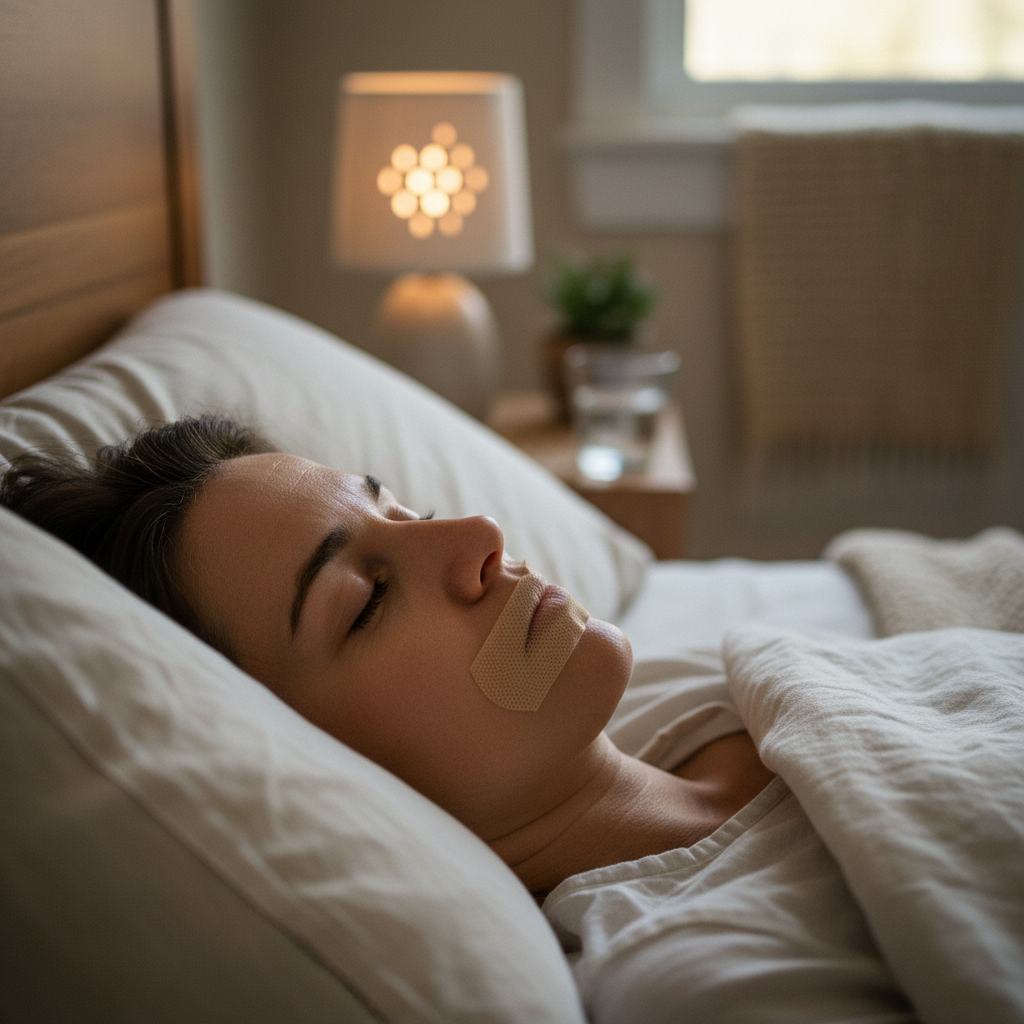
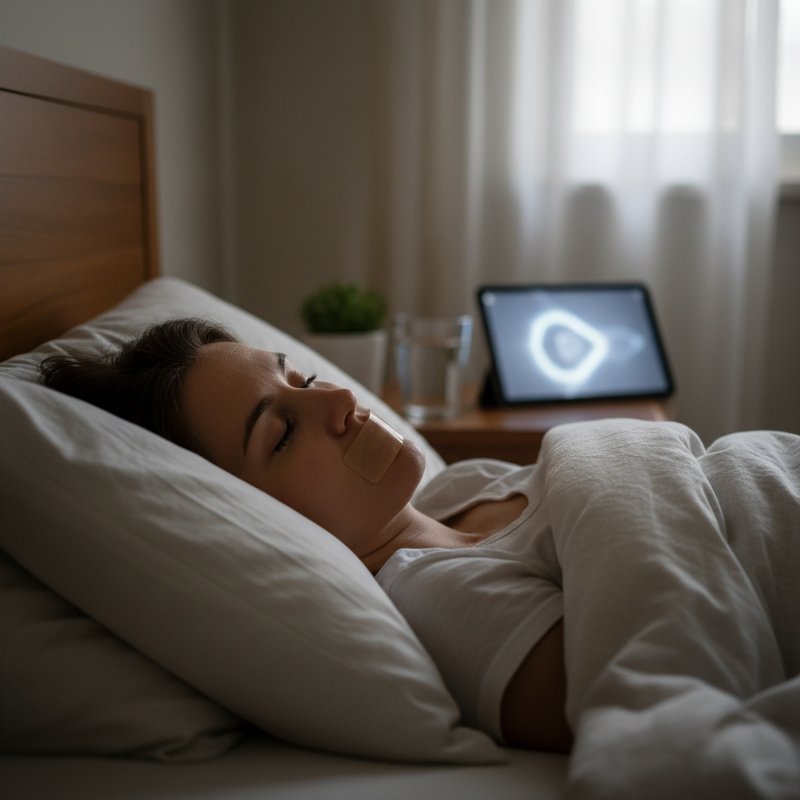
Understanding the science of nasal breathing and nighttime safety
Questions about whether mouth taping is safe for sleeping have become more common as people learn how breathing patterns influence sleep quality. Many adults breathe through their mouth during sleep without realizing it. That pattern can affect airflow, oral moisture, and the stability of breathing through the night, which is why the practice of encouraging nasal breathing has received growing attention.
Understanding the science behind nasal breathing helps explain why this topic matters. The nose filters particles, humidifies incoming air, and regulates airflow before it reaches the lungs. When breathing shifts to the mouth during sleep, people may experience dry mouth, snoring, or throat irritation. Mouth taping is sometimes used as a simple cue that encourages the lips to stay closed so the body relies more consistently on nasal breathing, but safety depends on factors such as clear nasal passages and the absence of certain breathing conditions.
In this guide, we explore whether mouth taping is safe for sleeping, including the potential benefits, possible risks, and who should avoid the practice. The goal is to help you understand how breathing habits affect sleep and how to approach this method thoughtfully. If you are exploring ways to improve breathing during sleep, MouthTape offers a place to learn more about nasal breathing and how tools like mouth tape can support healthier nighttime breathing habits.
| Feature | Nasal Breathing | Mouth Breathing | Why It Matters for Sleep |
|---|---|---|---|
| Air Filtration | Nose hairs and cilia filter particles | Air enters without filtration | Cleaner air reaching the lungs |
| Air Humidity | Nasal passages warm and humidify air | Airflow dries oral tissues | Helps prevent dry mouth and throat irritation |
| Breathing Efficiency | Supports balanced oxygen and carbon dioxide exchange | Less efficient airflow regulation | Can influence sleep comfort and stability |
| Nitric Oxide Production | Produced in the nasal sinuses and carried into inhaled air | Reduced delivery when breathing through the mouth | Supports healthy circulation and oxygen transport |
| Situation | Safety Consideration | Recommended Approach | Alternative Support |
|---|---|---|---|
| Nasal Congestion | Not recommended if nasal airflow is blocked | Clear nasal passages before considering mouth taping | Saline rinse or nasal breathing support |
| Suspected Sleep Apnea | Requires medical evaluation | Consult a clinician or sleep specialist first | Sleep study and medically guided treatment |
| Sensitive Skin | Possible irritation from adhesives | Use hypoallergenic, skin-safe tape and test first | Skin barrier balm or patch test |
| Clear Nasal Airway | Generally safer starting point | Begin with short trials while awake | Gradually transition to overnight use |
FAQ 1: Is mouth taping safe for everyone to try?
Mouth taping is generally safe for healthy adults who can breathe comfortably through their nose, but it is not appropriate for everyone. Before trying it, confirm that nasal breathing feels clear and steady while you are awake. If the nose is blocked due to chronic congestion, a deviated septum, or another airway issue, closing the mouth could feel uncomfortable or lead to air hunger. Anyone who experiences panic, difficulty breathing, or significant discomfort should remove the tape immediately.
People who have symptoms such as loud persistent snoring, gasping during sleep, or excessive daytime fatigue should speak with a healthcare professional before trying mouth taping, since these can sometimes indicate sleep apnea or another breathing disorder. Mouth taping is intended to support normal nasal breathing during sleep, not replace medical evaluation when breathing problems are suspected.
FAQ 2: How do I know if I should avoid mouth taping?
You should avoid mouth taping if you cannot breathe comfortably through your nose or if you have certain medical conditions that affect nighttime breathing. Mouth tape is designed to support nasal breathing during sleep, so it should only be used when nasal airflow is clear. People with severe nasal obstruction, active respiratory infections, or a history of sleep-disordered breathing such as sleep apnea should avoid this practice until they have been evaluated by a healthcare professional.
There are also situations where using mouth tape is not recommended. Alcohol and sedatives can reduce the body’s natural arousal response during sleep, which may make it harder to respond to breathing discomfort. Children should not use mouth tape unless it is recommended by a qualified clinician. If you experience air hunger, anxiety, or difficulty breathing, remove the tape immediately and reassess whether nasal breathing is fully comfortable.
FAQ 3: What are the main benefits of nasal breathing?
Nasal breathing supports healthier airflow during sleep by filtering, humidifying, and regulating the air before it reaches the lungs. The nose contains small hairs and mucus that trap particles such as dust and allergens, while the nasal passages warm and moisten incoming air. This helps protect the airway and maintain moisture in the throat during sleep, which is why people who breathe through their nose often experience less dry mouth and throat irritation overnight.
Another important factor is nitric oxide production in the sinuses, which plays a role in airway function and blood circulation. When breathing occurs through the nose, this molecule mixes with inhaled air and supports efficient oxygen exchange in the lungs. Mouth tape is often used as a simple mechanical cue to help keep the lips closed during sleep, encouraging the body to rely on nasal breathing and maintain a more stable breathing pattern overnight.
FAQ 4: Can mouth taping help with dry mouth?
Yes, mouth taping can help reduce dry mouth during sleep when the dryness is caused by breathing through the mouth. When the mouth stays open at night, constant airflow can evaporate saliva and leave the gums and throat feeling dry by morning. Saliva plays an important role in oral health because it helps neutralize acids, wash away food particles, and protect teeth from decay. Encouraging nasal breathing helps the mouth retain moisture and maintain a more balanced oral environment overnight.
Mouth tape supports this shift by acting as a gentle cue that keeps the lips closed during sleep. Instead of “forcing” the airway shut, the goal is to help the body rely on nasal breathing, which naturally humidifies incoming air and reduces the evaporation of saliva. Many people notice less morning dryness and throat irritation when nasal breathing becomes more consistent during sleep.
FAQ 5: Which type of tape is best for sleeping?
The safest option is mouth tape designed specifically for facial use, using a hypoallergenic, medical-grade adhesive that is gentle on the skin around the lips. The skin in this area is delicate, so the tape should provide a secure hold while remaining easy to remove in the morning. Many mouth tape products use breathable fabric and a medical-grade silicone-free gel adhesive, which helps keep the tape comfortable during overnight wear while supporting nasal breathing.
Avoid using duct tape, masking tape, or other household adhesives, since these materials are not intended for facial skin and may cause irritation or damage. Some mouth tape designs also include a small central breathing vent, which adds an extra layer of reassurance while encouraging nasal breathing during sleep. Applying a small amount of lip balm to the lips themselves can also help make removal more comfortable in the morning.
FAQ 6: What are the risks of using the wrong tape?
Using the wrong type of tape can irritate or damage the delicate skin around the lips. Household adhesives such as duct tape or packing tape are not designed for skin contact and may contain strong glues that can cause painful irritation, allergic contact dermatitis, or small skin tears when removed after several hours. Pulling off a strong adhesive in the morning can also remove the top layer of skin or pull out fine facial hairs, leaving redness or soreness.
Mouth tape designed for sleep uses gentler, skin-safe adhesives and breathable materials so the tape can stay in place overnight and remove more comfortably in the morning. Choosing tape made specifically for facial use helps reduce the risk of irritation while still supporting the goal of encouraging nasal breathing during sleep.
FAQ 7: Is mouth tape safe for people with allergies?
Mouth taping can be safe for people with mild allergies if nasal breathing remains clear and comfortable. Mouth tape works by encouraging the body to rely on nasal breathing during sleep, so the nose must be able to move air freely. When allergies cause significant swelling, congestion, or excess mucus, the body may rely on mouth breathing as a backup airway. In those situations, using mouth tape can feel uncomfortable and should be avoided until nasal airflow improves.
A practical approach is to check nasal breathing before bed. If you can breathe comfortably through your nose while awake, mouth tape may still be used. If allergy symptoms make nasal breathing difficult, it is better to wait until the congestion settles. The goal is always to support natural nasal breathing, not to restrict airflow when the nose is already blocked.
FAQ 8: Is mouth tape safe for sleeping if I snore?
Mouth tape can be safe for sleeping if snoring is mainly caused by mouth breathing, but it is not appropriate when snoring is linked to untreated sleep apnea. Snoring often occurs when the mouth stays open and airflow causes the soft tissues in the throat to vibrate. Mouth tape supports nasal breathing by gently keeping the lips closed, which can reduce snoring in people whose airway remains stable during sleep.
However, loud snoring combined with gasping, choking sounds, or frequent awakenings may indicate obstructive sleep apnea. In those situations, closing the mouth does not address the underlying airway collapse and professional evaluation is important. If these symptoms are present, a sleep study can help determine the cause before considering mouth tape as a supportive breathing tool.