
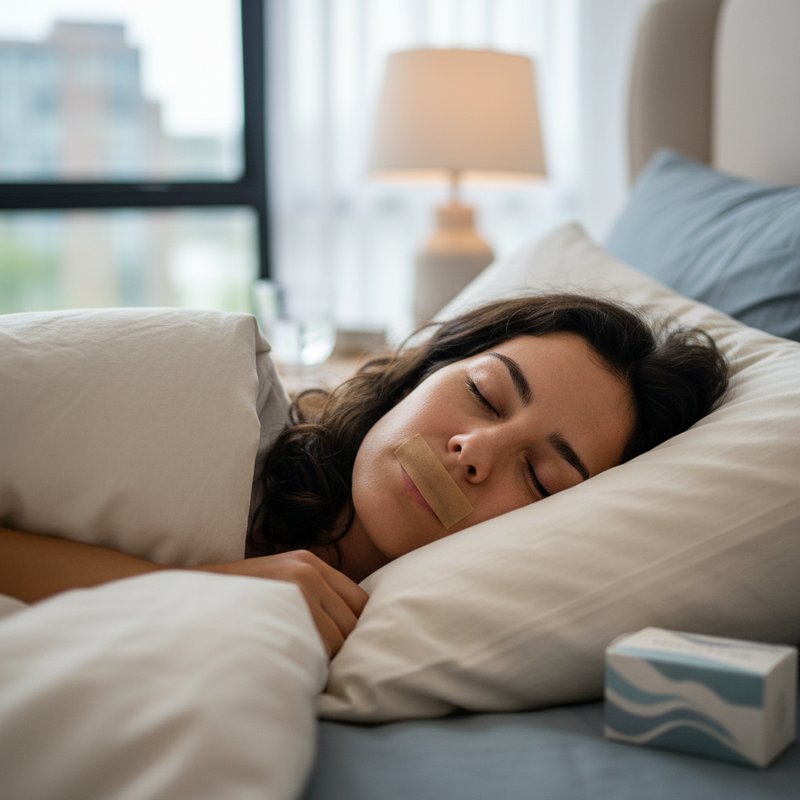
Master Nasal Breathing for Better Rest and Improved Oral Health
Many people wake up with a dry mouth or foggy feeling without realizing that nighttime breathing patterns may be part of the cause. When breathing shifts from the nose to the mouth during sleep, the body bypasses the nose’s natural filtration and humidification system. Understanding the science behind nasal breathing helps explain why this matters. The nasal passages filter particles, humidify incoming air, and produce nitric oxide in the sinuses, a molecule involved in airway function and circulation that supports efficient oxygen use during rest.
Mouth breathing at night is commonly associated with dry mouth, throat irritation, snoring, and less stable sleep. This is why some people explore mouth tape as a simple tool to support nasal breathing. Mouth tape works as a gentle mechanical cue that helps keep the lips closed during sleep so the body naturally relies on the nasal airway. Rather than forcing breathing, the goal is to support the breathing pattern the body is designed to use while resting.
In this guide, we walk through how to use mouth tape for sleep step by step, including how to prepare your skin, apply the tape correctly, and monitor signs that the practice is working. If you are exploring this approach, MouthTape offers mouth tape designed specifically for overnight use. It uses breathable rayon fabric, a medical-grade silicone-free gel adhesive, and a central breathing vent for safety, helping support comfortable nasal breathing while you sleep.
| Feature | Material / Design | Purpose During Sleep | Why It Matters |
|---|---|---|---|
| Adhesive Type | Medical-grade silicone-free gel adhesive | Keeps tape secure overnight while remaining gentle on skin | Helps the tape stay in place without pulling delicate skin in the morning |
| Fabric Material | Breathable rayon fabric (silk feel) | Allows airflow and comfort during sleep | Supports overnight wear without trapping heat or moisture |
| Safety Design | Central breathing vent | Provides a small airflow pathway | Adds reassurance while encouraging nasal breathing |
| Skin Comfort | Soft facial-safe adhesive formulation | Reduces irritation on sensitive lip-area skin | Makes nightly use more comfortable and sustainable |
| Biological Function | Mechanism | Impact During Sleep | Evidence Level |
|---|---|---|---|
| Air Filtration | Nasal hairs and mucus trap airborne particles | Cleaner air reaches the lungs | Strong physiological evidence |
| Nitric Oxide Production | Sinuses release nitric oxide during nasal breathing | Supports airway function and circulation | Strong physiological evidence |
| Air Humidification | Nasal mucosa warms and moistens air | Reduces dry mouth and throat irritation | Moderate to strong evidence |
| Stable Breathing Patterns | Nasal airflow regulates breathing resistance | Supports quieter and more stable breathing during sleep | Moderate evidence |
FAQ 1: Why is nasal breathing better than mouth breathing?
Nasal breathing is better than mouth breathing because the nose filters particles, humidifies air, and supports nitric oxide production that helps the body use oxygen more efficiently during sleep. Understanding the science behind nasal breathing explains why it plays an important role in sleep quality. The nasal passages condition incoming air and release nitric oxide from the sinuses, which supports airway function and circulation while the body rests.
Mouth breathing bypasses these processes, allowing dry and unfiltered air into the airway. This pattern is often linked with dry mouth, snoring, and less stable breathing during sleep. Mouth tape is used as a simple mechanical cue that keeps the lips gently closed at night, helping the body maintain nasal breathing and supporting more consistent nighttime airflow.
FAQ 2: Is mouth taping for sleep safe for everyone?
Mouth taping for sleep is generally safe for healthy adults who can breathe comfortably through their nose, but it is not appropriate for everyone. Understanding the science behind safe use starts with nasal airflow. Before applying mouth tape, you should be able to breathe clearly through your nose while awake and lying down. Avoid mouth taping if you have significant nasal congestion, a heavy cold, or untreated sleep apnea, since these conditions can limit nasal breathing. It is also wise to avoid using mouth tape after consuming alcohol or sedatives, which may reduce your ability to wake or respond if breathing feels uncomfortable.
When starting a mouth tape routine, choose mouth tape designed for sleep, made with breathable rayon fabric, a gentle medical-grade silicone-free gel adhesive, and a central breathing vent for safety. These features allow the tape to stay secure overnight while remaining comfortable on sensitive facial skin. The tape acts as a mechanical cue that encourages nasal breathing, rather than forcing the mouth closed. If you experience chronic nasal blockage, persistent snoring, or concerns about sleep apnea, it is best to speak with a clinician before trying mouth tape.
FAQ 3: What kind of tape should I use for my lips?
You should use mouth tape designed specifically for sleep, made with skin-safe adhesive and breathable materials suitable for the delicate skin around the lips. Understanding the science behind comfort and safety is important because the lip area is sensitive and exposed to movement throughout the night. Well-designed mouth tape typically uses breathable fabric and gentle medical-grade adhesive so it stays in place while remaining comfortable to remove in the morning.
Some mouth tape products also include a small central breathing vent, which provides an added layer of reassurance while the tape encourages the lips to stay closed and supports nasal breathing. Avoid using duct tape, masking tape, or other industrial adhesives, which are not designed for facial skin and may cause irritation or damage.
FAQ 4: How do I prepare my skin before taping?
Preparing your skin before using mouth tape starts with making sure the area around your lips is clean and dry so the adhesive can stay in place comfortably through the night. Oils, skincare products, or moisture around the mouth can weaken the adhesive and cause the tape to lift while you sleep. Wash your face with a gentle cleanser and dry the skin fully before applying mouth tape. This simple step helps the tape maintain a secure seal while encouraging nasal breathing throughout the night.
To keep the experience comfortable, apply a small amount of lip balm to the lips themselves, not the surrounding skin. This helps prevent the adhesive from gripping too tightly on the delicate lip surface while still allowing the tape to stay anchored on the skin around the mouth. Mouth tape designed for sleep, made with breathable rayon fabric and a gentle silicone-free gel adhesive, is intended to stay secure overnight while remaining easy to remove in the morning.
FAQ 5: Can I use mouth tape if I have a cold?
You should avoid using mouth tape when your nose is blocked or heavily congested, because clear nasal breathing is required for mouth taping to work safely. Understanding the science behind this helps explain why. Mouth tape is designed to encourage nasal breathing during sleep, but if the nasal passages are swollen from a cold, forcing that pattern can create discomfort and disrupted breathing. In these situations, your body naturally relies on the mouth as a backup airway, so it is best to pause your mouth tape routine until nasal airflow returns.
Once your congestion improves and you can breathe comfortably through your nose again, you can resume using mouth tape. Some people find that clearing the nasal passages before bed with a saline rinse or similar gentle method helps restore comfortable airflow. Mouth tape works best when nasal breathing is already possible, allowing it to act as a simple cue that supports a stable breathing pattern during sleep.
FAQ 6: How long does it take to see results from taping?
Most people notice early changes within the first few nights of using mouth tape, especially less dry mouth and more stable breathing during sleep. Understanding the science behind this helps explain why the effects can appear quickly. Mouth tape acts as a mechanical cue that encourages the lips to stay closed, allowing the body to maintain nasal breathing through the night. Since nasal breathing helps filter and humidify incoming air, many users report waking with less throat dryness and fewer nighttime awakenings related to mouth breathing.
More consistent changes often appear after two to three weeks of regular use, as the body becomes more accustomed to resting with the lips closed and the tongue positioned against the palate. What research shows is that breathing patterns can adapt over time when practiced consistently. Using mouth tape each night helps reinforce nasal breathing during sleep, which can gradually make that pattern feel more natural.
FAQ 7: What are the signs that mouth taping is working?
Signs that mouth taping is working often include waking up without a dry mouth, experiencing quieter breathing during sleep, and feeling more refreshed in the morning. Understanding the science behind these changes helps explain why they appear. When mouth tape keeps the lips gently closed, it supports nasal breathing throughout the night. Nasal breathing helps humidify incoming air and maintain more stable airflow, which can reduce dry mouth, throat irritation, and noisy breathing that commonly occur with mouth breathing.
Over time, some people also notice more consistent sleep and improved morning alertness, since breathing patterns remain steadier overnight. What research shows is that stable breathing supports better sleep continuity, which can influence how rested you feel the next day. Mouth tape does not fix every sleep issue, but it can support healthier breathing patterns that contribute to more comfortable, uninterrupted rest.
FAQ 8: Should I talk to a doctor before trying this?
Yes, it is a good idea to talk to a doctor before trying mouth tape if you have ongoing breathing concerns such as suspected sleep apnea or chronic sinus blockage. Understanding the science behind safe breathing during sleep matters here. Mouth tape is designed to support nasal breathing, but if conditions like untreated sleep apnea, persistent nasal obstruction, or structural airway issues are present, a clinician can help determine whether mouth taping is appropriate for you. A healthcare professional may also recommend testing or treatment that improves nasal airflow before starting a mouth tape routine.
For most healthy adults who can breathe comfortably through their nose, mouth tape can be used as a simple tool to encourage nasal breathing during sleep. However, when symptoms such as loud snoring, gasping during sleep, or frequent nighttime awakenings are present, professional guidance helps ensure you address the underlying cause while using safe strategies to improve breathing and rest.

